History of ICJ
15 សីហា 2025
- 1. History
The creation of the Court represented the culmination of a long development of methods for the pacific settlement of international disputes, the origins of which can be said to go back to classical times.
Article 33 of the United Nations Charter lists the following methods for the pacific settlement of disputes between States: negotiation, inquiry, mediation, conciliation, arbitration, judicial settlement, and resort to regional agencies or arrangements, to which good offices should also be added. Among these methods, certain involve appealing to third parties. For example, mediation places the par-ties to a dispute in a position in which they can themselves resolve their dispute thanks to the intervention of a third party. Arbitration goes further, in the sense that the dispute is in fact submitted to the decision or award of an impartial third party, so that a binding settlement can be achieved. The same is true of judicial settlement, except that a court is subject to stricter rules than an arbitrate tribunal in procedural matters, for example. Historically speaking, mediation and arbitration preceded judicial settlement. The former was known, for example, in ancient India, whilst numerous examples of the latter are to be found in ancient Greece. in China, among the Arabian tribes, in the early Islamic world, in maritime customary law in medieval Europe and in Papal practice.
The modern history of international arbitration is, however, generally recognized as dating from the so-called Jay Treaty of 1794 between the United States of America and Great Britain. This Treaty of Amity, Commerce and Navigation provided for the creation of three mixed commissions, composed of American and British nationals in equal numbers, who were tasked with settling a number of outstanding questions between the two countries which it had not been possible to resolve by negotiation. Whilst it is true that these mixed commissions were not strictly speaking organs of third-party adjudication, they were intended to function to some extent as tribunals. They re-awakened interest in the process of arbitration. Throughout the nineteenth century, the United States and the United Kingdom had recourse to them, as did other States in Europe and the Americas.
The Alabama Claims arbitration in 1872 between the United Kingdom and the United States marked the start of a second, and still more decisive, phase in the development of international arbitration. Under the Treaty of Washington of 1871. the United States and the United Kingdom agreed to submit to arbitration claims by the former for alleged breaches of neutrality by the latter during the American Civil War. The two countries set out certain rules governing the duties of neutral governments that were to be applied by the tribunal, which they agreed should consist of five members, to be appointed respectively by the Heads of State of the United States, the United Kingdom, Brazil, Italy and Switzerland, the last three States not being parties to the case. The award of the arbitrate tribunal ordered the United Kingdom to pay compensation, and the latter duly complied. The proceedings served as a demonstration of the effectiveness of arbitration in the settlement of a major dispute and it led during the latter years of the nineteenth century to developments in various directions, namely: a sharp growth in the practice of inserting clauses in treaties providing for recourse to arbitration in the event of a dispute between the parties;the conclusion of general arbitration treaties for the settlement of specified classes of inter-State disputes;efforts to construct a general law of arbitration, so that countries wishing to have recourse to this means of settling disputes would not be obliged to agree each time on the procedure to be adopted, the composition of the tribunal, the rules to be followed and the factors to be taken into consideration in rendering the award; proposals for the creation of a permanent international arbitrate tribunal in order to obviate the need to set up a special ad hoc tribunal to decide each dispute.
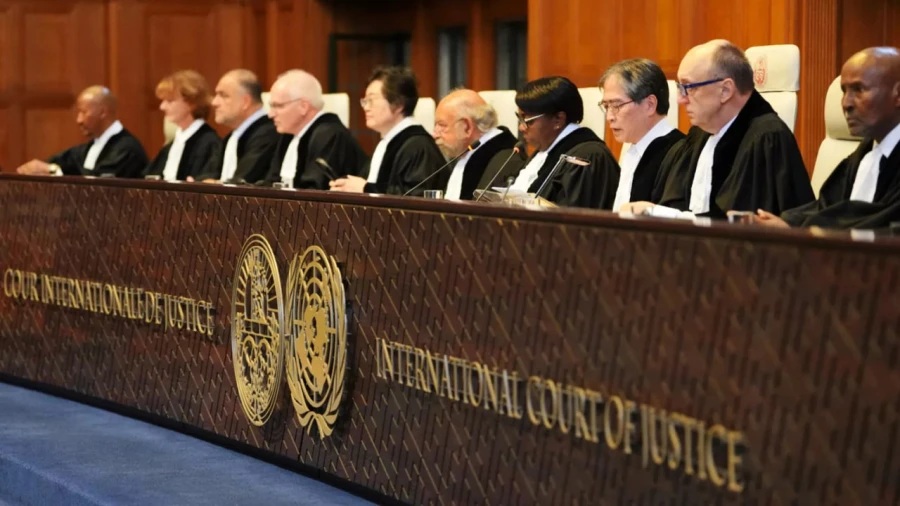
The Permanent Court of Arbitration was founded in 1899
The Hague Peace Conference of 1899 marked the beginning of a third phase in the modern history of international arbitration. The chief object of the Conference, in which - a remarkable innovation for the time the smaller States of Europe, some Asian States and Mexico also participated, was to discuss peace and disarmament. It ended by adopting a Convention on the Pacific Settlement of International Disputes, which dealt not only with arbitration but also with other methods of pacific settlement, such as good offices and mediation. With respect to arbitration, the 1899 Convention provided for the creation of permanent machinery which would enable arbitrate tribunals to be set up as desired and would facilitate their work. This institution, known as the Permanent Court of Arbitration (PCA), consisted in essence of a panel of jurists designated by each country acceding to the Convention each such country being entitled to designate up to four from among whom the members of each arbitral tribunal could be chosen'. The Convention further created a permanent Bureau, located at The Hague, with functions corresponding to those of a registry or a secretariat, and it laid down a set of rules of procedure to govern the conduct of arbitration. It will be seen that the name "Permanent Court of Arbitration" is not a wholly accurate description of the machinery set up by the Convention, which represented only a method or device for facilitating the creation of arbitrate tribunals as and when necessary. Nevertheless, the system so established was permanent and the Convention as it were "institutionalized the law and practice of arbitration, placing it on a more definite and more generally accepted footing.
The PCA was established in 1900 and began operating in 1902. A few years later, in 1907, a second Hague Peace Conference, to which the States of Central and Southern America were also invited, revised the Convention and improved the rules governing arbitrate proceedings. Some participants would have preferred the Conference not to confine itself to improving the machinery created in 1899. The United States Secretary of State, Elihu Root, had instructed the United States delegation to work towards the creation of a permanent tribunal composed of judges who were judicial officers and nothing else, who had no other occupation, and who would devote their entire time to the trial and decision of international cases by judicial methods. "These judges", wrote Secretary Root, "should be so selected from the different countries that the different systems of law and procedure and the principal languages shall be fairly represented". The United States, the United Kingdom and Germany submitted a joint proposal for a permanent court, but the Conference was unable to reach agreement upon it. It became apparent in the course of the discussions that one of the major difficulties was that of finding an acceptable way of choosing the judges, none of the proposals made having managed to command general support. The Conference confined itself to recommending that States should adopt a draft convention for the creation of a court of arbitrate justice as soon as agreement was reached "respecting the selection of the judges and the constitution of the court". Although this court never became a reality, the draft convention enshrined certain fundamental ideas that some years later were to serve as a source of inspiration for the drafting of the Statute of the Permanent Court of International Justice (PCIJ). The court of arbitrate justice. "composed of judges representing the various judicial systems of the world, and capable of ensuring continuity in arbitrate jurisprudence" was to have had its seat at The Hague and to have had jurisdiction to entertain cases submitted to it pursuant to a general treaty or in terms of a special agreement. Provision was made for summary proceedings before a special delegation of three judges elected annually and the convention was to be supplemented by rules to be determined by the court itself.
Not with standing the fate of these proposals, the PCA, which in 1913 took up residence in the Peace Palace that had been built for it from 1907 to 1913 thanks to a gift from Andrew Carnegie, has made a positive contribution to the development of international law. Among the classic cases that were decided before the Second World War through recourse to its machinery, mention may be made of the Manouba and Carthage cases (1913) and of the Timor Frontiers (1914) and Sovereignty over the Island of Palmas (1928) cases. For a long while thereafter, the PCA experienced a significant lull in its activity, perhaps due in part to the establishment of the PCIJ and its successor, the ICJ.
In the 1990s, however, the PCA underwent something of a revival. Today, a large number of cases are pending before its machinery, involving a wide variety of disputes between various combinations of States, State entities, international organizations and private parties. Recent inter-State disputes in which the PCA has acted as registry include the case between Eritrea and Yemen concerning questions of territorial sovereignty and maritime delimitation (1998 and 1999); the Boundary Commission (2008) and Claims Commission (2009) cases between Eritrea and Ethiopia concerning, respectively, the delimitation of their boundary and various claims of compensation following hostilities between them; the arbitration between Ireland and the United Kingdom (2008) under the 1992 Convention for the Protection of the Marine Environment of the North-East Atlantic (OSPAR); the Indus Waters Kishenganga Arbitration between Pakistan and India; the arbitration concerning a territorial and maritime dispute between the Republic of Croatia and the Republic of Slovenia (2017); and various arbitrations under Annex VII of the 1982 United Nations Convention on the Law of the Sea, including an environmental dispute in the MOX Plant case between Ireland and the United Kingdom (2008), the Arctic Sunrise Arbitration between the Netherlands and the Russian Federation (2015), the Chagos Marine Protected Area Arbitration between Mauritius and the United Kingdom (2015), the South China Sea Arbitration between the Republic of the Philippines and the People's Republic of China (2016), and several maritime delimitations: Barbados/Trinidad and Tobago (2006), Guyana/Suriname (2007) and Bangladesh/India (2014). The PCA also acted as registry in the boundary dispute between the Government of Sudan and the Sudan People's Liberation Movement/Army (2009).
Disputes between private parties and States or State entities have long been part of the PCA's mandate, starting with the Radio Corporation of America v. China arbitration in 1935, the first of its kind. Investment disputes between private parties and host States under bilateral and multilateral investment treaties currently constitute about two-thirds of the PCA's arbitration.
The PCIJ (1922-1946) was created by the League of Nations
Article 14 of the Covenant of the League of Nations gave the Council of the League responsibility for formulating plans for the establishment of a Permanent Court of International Justice, such a court to be competent not only to entertain any dispute of an international character submitted to it by the parties to the dispute, but also to give an advisory opinion upon any dispute or question referred to it by the Council or by the Assembly.
It remained for the League Council to take the necessary action to give effect to Article 14. At its second session early in 1920, the Council appointed an Advisory Committee of Jurists to submit a report on the establishment of the PCIJ. The Committee sat in The Hague, under the chairmanship of Baron Descamps (Belgium), a renowned statesman and academic. In August 1920, a report containing a preliminary draft statute for the future Court was submitted to the Council, which, after making certain amendments, transmitted it to the First Assembly of the League of Nations, which opened at Geneva in November of that year. The Assembly instructed its Third Committee to examine the question of the Court's constitution. In December 1920, after an exhaustive study of the latter by a sub-committee, the Committee submitted a revised draft to the Assembly, which was unanimously adopted and which became the Statute of the PCIJ. The Assembly took the view that a vote alone would not be sufficient to establish the PCIJ and that each State represented in the Assembly would formally have to ratify the Statute. In a resolution of 13 December 1920, it called upon the Council to submit to the members of the League of Nations a protocol adopting the Statute and decided that the Statute should come into force as soon as the protocol had been ratified by a majority of Member States. The protocol was opened for signature on 16 December. By the time of the next meeting of the Assembly, in September 1921, a majority of the members of the League had signed and ratified the protocol. The Statute thus entered into force. It was revised only once, in 1929, the revised version coming into force in 1936.
Among other things, the new Statute resolved the previously insurmountable problem of the election of the members of a permanent international tribunal: it provided that the judges, were to be elected concurrently but independently by the Council and the Assembly of the League, and that those elected "should represent the main forms of civilization and the principal legal systems of the world". Simple as this solution may now seem, in 1920 it was a consider-able achievement to have devised it. The first elections were held on 14 September 1921. Following steps taken by the Netherlands Government in the spring of 1919, it was decided that the PCIJ should have its permanent seat at the Peace Palace in The Hague. It was accordingly in the Peace Palace that on 30 January 1922 the Court's preliminary session devoted to the elaboration of the Court's Rules opened, and it was there too that its inaugural sitting was held on 15 February 1922, with the Dutch jurist Loder as President.
The PCIJ was thus a working reality. The great advance it represented in the history of international legal proceedings can be appreciated by considering the following:
Unlike arbitrate tribunals, the PCIJ was a permanently constituted body governed by its own Statute and Rules of Procedure, fixed beforehand and binding on all parties having recourse to the Court.
It had a permanent Registry which, inter Alia, served as a channel of communication with governments and international bodies.
Its proceedings were largely public and provision was made for the publication of the written pleadings, of verbatim records of the sittings and of all documentary evidence submitted to it.
As a permanent tribunal, it was able to develop a constant practice and maintain a certain continuity in its decisions, thereby contributing to both legal certainty and the development of international law.
In principle the PCIJ was accessible to all States for the judicial settlement of their international disputes and they were able to declare beforehand that, for certain classes of legal disputes, they recognized the Court's jurisdiction as compulsory in relation to other States accepting the same obligation.
The PCIJ was empowered to give advisory opinions on any dispute or question referred to it by the League of Nations Council or Assembly.
The Court's Statute specifically listed the sources of law it was to apply in deciding contentious cases and giving advisory opinions, without prejudice to the power of the Court to decide a case ex aequo et bono if the parties so agreed.
The PCIJ was more representative of the international community and of the major legal systems of the world than any previous international tribunal.
Although the PCIJ was brought into being through, and by, the League of Nations, it was nevertheless not formally a part of the League. There was a close association between the two bodies, which found expression inter alia in the fact that the League Council and Assembly periodically elected the Members of the Court and that both the Council and Assembly were entitled to seek advisory opinions from the Court. Moreover, the Assembly adopted the Court's budget. But the Court never formed an integral part of the League, just as the Statute never formed part of the Covenant. In particular, a Member State of the League of Nations was not by this fact alone automatically a party to the Court's Statute.
Between 1922 and 1940 the PCIJ dealt with 29 contentious cases between States and delivered 27 advisory opinions. At the same time, several hundred treaties, conventions and declarations conferred jurisdiction upon it over specified classes of disputes. Thus, any doubts that might have existed as to whether a permanent international judicial tribunal could function in a practical and effective manner were dispelled. The Court's value to the international community was demonstrated in a number of ways. First, it developed a true judicial technique, which found expression in the Rules of Court, drawn up by the PCIJ in 1922 and subsequently revised on three occasions: in 1926, 1931 and 1936. Mention should also be made of the PCIJ's Resolution concerning the Judicial Practice of the Court, adopted in 1931 and revised in 1936, which laid down the internal procedure to be applied during the Court's deliberations on each case. In addition, whilst helping to resolve some serious international disputes, many of them con-sequences of the First World War, the decisions of the PCIJ often clarified previously unclear areas of international law or contributed to its development.
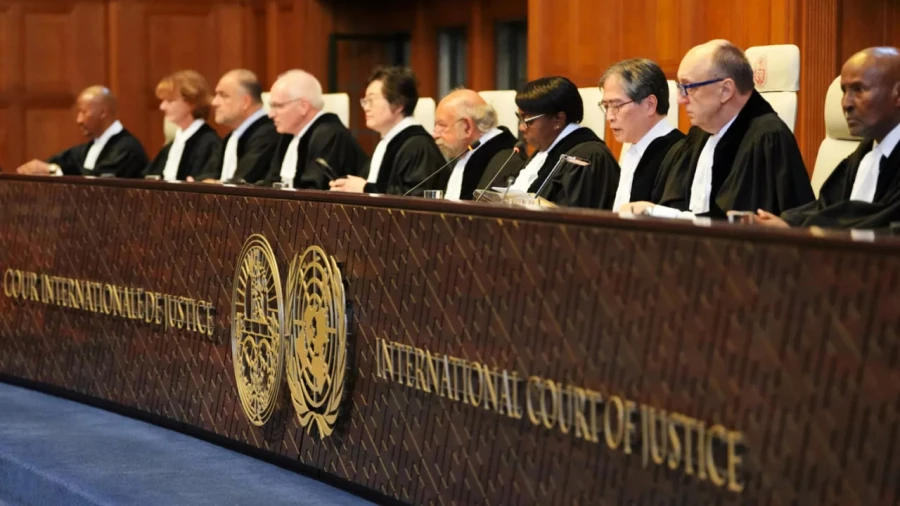
The ICJ is the principal judicial organ of the United Nations
The outbreak of war in September 1939 inevitably had serious consequences for the PCIJ, which had already for some years been experiencing a period of diminished activity. After its last public sitting on 4 December 1939, the PCIJ did not deal with any judicial business and no further judicial elections were held. In 1940, the Court removed to Geneva, a single judge remaining at The Hague, together with a few Registry officials of Dutch nationality.
The upheavals of war led to renewed thought about the future of the Court and the creation of a new international legal order. In 1942, the United States Secretary of State and the Foreign Secretary of the United Kingdom declared themselves in favor of the establishment or re-establishment of an international court after the war, and the Inter-American Juridical Committee recommended the extension of the PCIJ's jurisdiction. Early in 1943, the British Government took the initiative of inviting a number of experts to London to constitute an informal Inter-Allied Committee to examine the matter. This Committee, under the chairmanship of Sir William Malkin (United Kingdom), held 19 meetings, which were attended by jurists from 11 countries. In its report, which was published on 10 February 1944, it recommended:
-that the Statute of any new international court created should be based on that of the PCIJ;
-that advisory jurisdiction should be retained in the case of the new Court;
-that acceptance of the jurisdiction of the new Court should not be compulsory:
-that the Court should have no jurisdiction to deal with essentially political matters.
Meanwhile, on 30 October 1943, following a conference between China, the USSR, the United Kingdom and the United States, a joint declaration was issued recognizing the necessity "of establishing at the earliest practicable date a general international organization, based on the principle of the sovereign equality of all peace-loving States, and open to membership by all such States, large and small, for the maintenance of international peace and security".
This declaration led to exchanges between the Four Powers at Dumbarton Oaks, resulting in the publication on 9 October 1944 of proposals for the establishment of a general international organization, to include an international court of justice. The next step was the convening of a meeting in Washington, in April 1945, of a committee of jurists representing 44 States. This Committee, under the chairmanship of G. H. Hackworth (United States), was entrusted with the preparation of a draft Statute for the future international court of justice, for submission to the San Francisco Conference, which during the months of April to June 1945 was to draw up the United Nations Charter. The draft Statute pre-pared by the Committee was based on the Statute of the PCIJ and was thus not a completely fresh text. The Committee nevertheless declined to take a position on a number of points, which it felt should be decided by the Conference: should a new court be created? In what form should the court's mission as the principal judicial organ of the United Nations be stated? Should the court's jurisdiction be compulsory and, if so, to what extent? How should the judges be elected? The final decisions on these points, and on the definitive form of the Statute, were taken at the San Francisco Conference, in which 50 States participated.
That Conference decided against compulsory jurisdiction and in favour of the creation of an entirely new court, which would be a principal organ of the United Nations, on the same footing as the General Assembly, the Security Council, the Economic and Social Council, the Trusteeship Council and the Secretariat, and with its Statute annexed to and forming part of the Charter. The chief reasons that led the Conference to decide to create a new Court were the following:
As the Court was to be the principal judicial organ of the United Nations, it was considered inappropriate for this role to be filled by the PCIJ, which was linked to the League of Nations, then on the verge of dissolution.
The creation of a new Court was more logical in light of the fact that several States that were parties to the Statute of the PCIJ were not represented at the San Francisco Conference, and, conversely, several States represented at the Conference were not parties to the Statute.
There was a feeling in some quarters that the PCIJ formed part of an older order, in which European States had dominated the political and legal affairs of the international community, and that the creation of a new Court would make judicial settlement more accessible to non-European States. This has in fact happened as the membership of the United Nations has grown from 51 States in 1945 to 193 in 2018.
Participants at the San Francisco Conference nevertheless emphasized that all continuity with the past should not be broken, particularly since the Statute of the PCIJ had itself been drawn up on the basis of past experience, and it was considered better not to change something that in general had worked well. The Charter therefore plainly stated that the Statute of the ICJ was based upon that of the PCIJ; moreover, provisions were included in it to ensure that the PCIJ's juris-diction was transferred as far as possible to the ICJ. The PCIJ met for the last time in October 1945, when it was decided to take all appropriate measures to ensure the transfer of its archives and effects to the new ICJ, which, like its predecessor, was to have its seat at the Peace Palace. The judges of the PCIJ still formally in office all resigned on 31 January 1946, and the election of the first Members of the ICJ took place on 5 February 1946, at the First Session of the United Nations General Assembly and Security Council. In April 1946, the PCIJ was formally dissolved, and the ICJ, meeting for the first time, elected as its President Judge Guerrero, the last President of the PCIJ, and appointed the members of its Registry (largely from among former officials of the PCIJ). On 18 April 1946, the new Court held its inaugural public sitting.
The Statute and the Rules of Court
The Statute of the ICJ elaborates certain general principles laid down in Chapter XIV of the Charter. Whilst it forms an integral part of the Charter, it is not incorporated into it, but is simply annexed. This has avoided unbalancing the 111 articles of the Charter by the addition of the 70 articles of the Statute, and has facilitated access to the Court for States that are not members of the United Nations (see below p. 34). The articles of the Statute are divided into five chapters: "Organization of the Court" (Arts. 2-33), "Competence of the Court" (Arts. 34-38), "Procedure" (Arts. 39-64), "Advisory Opinions" (Arts. 65-68) and "Amendment" (Arts. 69-70). The procedure for amending the Statute is the same as that for amending the Charter, i.e., by a two-thirds majority vote in the General Assembly and ratification by two-thirds of the States, including the permanent members of the Security Council - the only difference being that States parties to the Statute without being members of the United Nations are allowed to participate in the vote in the General Assembly. Should the ICJ consider it desirable for its Statute to be amended, it must submit a proposal to this effect to the General Assembly by means of a written communication addressed to the Secretary-General. How-ever, there has hitherto been no amendment of the Statute of the ICJ.
In pursuance of powers conferred upon it by the Statute, the ICJ has drawn up its own Rules of Court. These Rules are intended to supplement the general rules set forth in the Statute and to make detailed provision for the steps to be taken to comply with them; however, the Rules may not contain any provisions that are repugnant to the Statute or which confer upon the Court powers that go beyond those conferred by the Statute.
The Rules of Court refer to the provisions of the Statute concerning the Court's procedure and the working of the Court and of the Registry, so that on many points it is necessary to consult both documents. The ICJ is competent to amend its Rules of Court, and can thus incorporate into them provisions embodying its practice as this has developed. On 5 May 1946, it adopted Rules largely based on the latest version of the Rules of Court of the PCIJ, which dated from 1936. In 1967, in the light of the experience it had acquired and of the need to adapt the Rules to changes that had taken place in the world and in the pace of international events, it embarked upon a thorough revision of its Rules and set up a standing committee for the purpose. On 10 May 1972, it adopted certain amendments which came into force on 1 September that year. On 14 April 1978, the Court adopted a thoroughly revised set of Rules which came into force on 1 July 1978. The object of the changes made at a time when the Court's activity had un-deniably fallen off - was to increase the flexibility of proceedings, making them as simple and rapid as possible, and to help reduce the costs to the parties, in so far as these matters depended upon the Court. On 5 December 2000, the Court amended two articles of the 1978 Rules: Article 79 on preliminary objections and Article 80 concerning counter-claims. The purpose of the new amendments was to shorten the duration of these incidental proceedings and to clarify the rules in force so as to reflect more faithfully the Court's practice. The amended versions of Articles 79 and 80 entered into force on 1 February 2001, with the previous versions continuing to govern all phases of cases submitted to the Court before that date. Amended and slightly simplified versions of the Preamble and of Article 52 entered into force on 14 April 2005. On 29 September 2005, a new version of Article 43 came into force, setting out the circumstances in which the Court was required to notify a public international organization that is a party to a convention whose construction may be in question in a case brought before it.
Moreover, since October 2001 the Court has issued Practice Directions for the use of States appearing before it. These Directions involve no amendment of the Rules but are supplemental to them. They are the fruit of the Court's constant review of its working methods, responding to a need to adapt to the considerable growth in its activity over recent years. Reference will be made to certain of these directions later in this handbook.
As at 31 December 2018, 148 contentious cases had been brought before the Court (see below pp. 302-308), which had delivered 129 judgments (some cases having been withdrawn). It had also given 27 advisory opinions (see below pp. 309-310). The small number of cases initially submitted to the Court led to the adoption of a resolution by the General Assembly in 1947 emphasizing the need to make greater use of the Court. Shortly thereafter, the Court's work assumed a tempo comparable to that of the PCIJ. Then, starting in 1962, the States which had created the ICJ appeared to be more reluctant to submit their disputes to it. The number of cases submitted each year, which had averaged two or three during the fifties, fell to none or one in the sixties; from July 1962 to January 1967 no new case was brought, and the situation was the same from February 1967.
ព័ត៌មានថ្មីៗ
លោកប្រធានាធីបតីត្រាំ និយាយថា កងកម្លាំងសហរដ្ឋអាមេរិកចាប់វាយប្រហារទៅលើក្រុម ISIS នៅក្នុង នីហ្គឺរៀ
26 ធ្នូ 2025
ក្រសួងយុត្តិធម៌សហរដ្ឋអាមេរិក បានដាក់ពាក្យបណ្តឹងរដ្ឋចំនួន៦ ជុំវិញបញ្ហាបញ្ជីឈ្មោះអ្នកបោះឆ្នោត
27 កញ្ញា 2025
ឈ្វេងយល់អំពី ការបង្កើតអាពាហ៍ពិពាហ៍
21 កញ្ញា 2025

តើអ្វីទៅជា ប្រទានកម្ម អច្ច័យទាន សន្តតិកម្ម មតកសាសន៍?
18 កញ្ញា 2025
កម្មវិធីយល់ដឹងពីច្បាប់ "បណ្តឹងតប"
18 សីហា 2025